

Medically reviewed by Dr. Sreerag Ashok, MBBS, MD, Consultant Psychiatrist. Last reviewed: 19 November 2026.
If someone in your family drinks every day and can’t stop, the safest first step is to see a doctor before they quit. Stopping suddenly after months of heavy drinking can bring on shaking, confusion and fits. At Josco Hospital in Edappon, near Pandalam, our psychiatry team handles de-addiction treatment, from the first talk to detox, counselling and follow-up. You can call 0479 237 5555 and ask for the psychiatry OP. The call is confidential.
How do you know it has become an addiction?
Most families come to us after months, sometimes years, of hoping it would settle on its own. You don’t have to be certain before you ask for help. Some signs we often hear about:
- He needs a drink in the morning before his hands are steady.
- He has promised to cut down many times and couldn’t.
- On days without alcohol he is sweaty, restless and can’t sleep.
- Work is being missed, money is going, and there are fights at home.
- Bottles are hidden, or he drinks alone.
- He keeps drinking even after a doctor has warned him about his liver, sugar or BP.
The same signs apply to cannabis, sleeping tablets, painkillers and tobacco. Women drink too, often more secretly, and the treatment is the same.
Is it safe to stop drinking suddenly?
For a light drinker, yes. For someone who drinks heavily every day, not always. The body gets used to alcohol, and when it is removed overnight, withdrawal usually starts within 6 to 24 hours. Shaking, sweating, a racing heart, vomiting and sleeplessness are common.
Some people have fits in the first two days. A smaller number develop delirium tremens around day 2 to 4. They become confused, frightened, see things that aren’t there, and run a fever. This needs hospital care straight away.
So please don’t try to “dry him out” by locking him in a room or hiding the bottles. If someone in withdrawal has a fit or becomes confused, bring them to our casualty, which is open 24 hours (0479 237 4010).
What happens during de-addiction treatment at Josco
The first visit is a conversation with the psychiatrist. We ask how much and how long the person has been drinking, about sleep, mood and work, and about any past withdrawal fits. Blood tests check the liver and other organs. The family is welcome to come in, and nothing is shared outside the treating team without the patient’s consent.
Detox usually takes about a week. Medicines keep withdrawal safe and comfortable, and thiamine (vitamin B1) is given to protect the brain. Heavy daily drinkers, and anyone who has had fits before, are safer admitted. Milder cases can often be managed from the OP with regular visits.
Detox only gets the alcohol out of the body. Staying off it is the harder part. That is where counselling comes in: individual sessions, group sessions, and learning what sets off the urge to drink. Depression, anxiety and poor sleep are common alongside drinking, and treating them makes a relapse less likely. Some patients are also helped by medicines that reduce craving, and the psychiatrist will discuss whether they suit.
Follow-up matters most in the first year. Many people slip at least once. When that happens, come back early rather than giving up on treatment.
What can the family do?
Pick a time when he is sober to talk, and talk about what actually happened (“You didn’t go to work on Monday”) rather than calling him a drunkard. Arguments when he has been drinking go nowhere and can turn unsafe. Try not to cover for him by paying his debts or making excuses at his workplace. Offer one clear step, like “Come with me to see the doctor on Thursday.”
If he refuses, you can still come and meet our team yourself. Family counselling is part of our programme because the people at home carry a lot of the strain.
About the de-addiction programme at Josco Hospital
Josco Multi-Speciality Hospital is a 200-bed hospital at Edappon, a short drive from Pandalam. Families come to us from Pandalam, Adoor, Kulanada, Mavelikara, Chengannur and other parts of Alappuzha and Pathanamthitta districts. The psychiatry team is led by Dr. R. Anil Kumar, who has worked in psychiatry and de-addiction for over 30 years, 18 of them at Josco, with Dr. Sreerag Ashok. Because the patient is in a general hospital, liver problems, diabetes, BP or an injury can be treated during the same stay.
Read more about the de-addiction programme or the Psychiatry and De-addiction department, or call 0479 237 5555.
Questions families ask us
Will anyone find out he is in treatment?
No. Consultations, admission and records are private, the same as for any other illness. We don’t share anything with an employer or anyone else without the patient’s consent.
How long is the treatment?
Detox takes about 5 to 10 days. Counselling and follow-up visits continue for several months after that. The psychiatrist will give you a plan after the first assessment.
Does he have to be admitted?
Not always. If withdrawal is likely to be mild and someone at home can keep an eye on him, outpatient treatment can work. If he drinks heavily every day or has had fits before, admission is safer.
Do you treat drug and tobacco addiction?
Yes. The team treats dependence on alcohol, cannabis and other drugs, sleeping tablets, painkillers and tobacco.
He won’t come. What can we do?
Come in yourselves. Meeting the team first helps you plan how to bring it up with him.
Where is the hospital?
Josco Multi-Speciality Hospital, Edappon, Alappuzha district, Kerala 690558, near Pandalam. OP enquiries: 0479 237 5555. WhatsApp (messages only): 98478 74869. Casualty, 24 hours: 0479 237 4010.
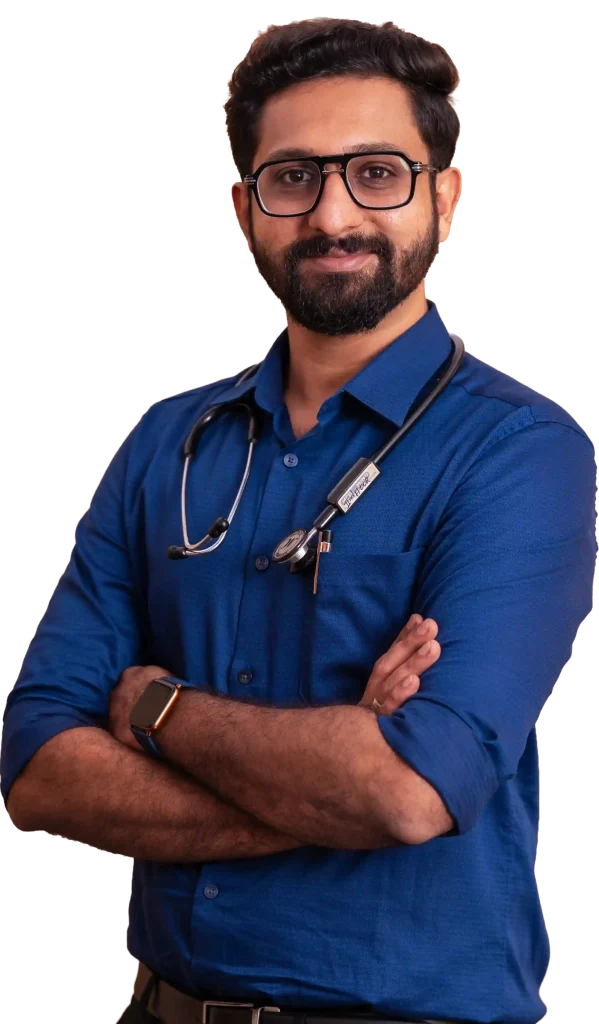
Medically reviewed by
MBBS, MD. Consultant Psychiatrist, Josco Multi-Speciality Hospital, Edappon, Pandalam.
Sees patients with alcohol and drug problems, depression, anxiety, OCD, schizophrenia, and memory and behaviour problems in older people. OP Monday to Saturday.
Last reviewed: 19 November 2026. This article is general health information and not a substitute for a consultation. Book an appointment or call 0479 237 5555.